

Understanding Vacuum Excavation
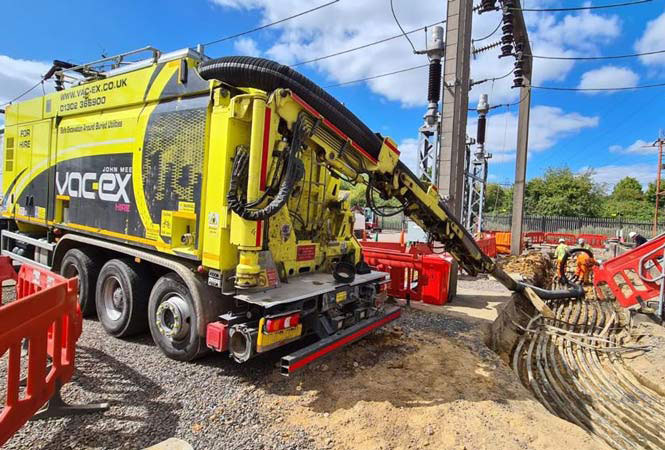
What is vacuum excavation?
Vacuum excavation is a non-destructive digging method that uses compressed air or high-pressure water to loosen soil before removing it with powerful suction. It is commonly used to expose buried utilities such as electricity cables, gas mains, water pipes and telecoms infrastructure.
Vacuum excavation is also known as suction excavation, and the two terms are commonly used interchangeably in UK construction and utilities.
Vac-Ex, operated by John Mee Construction Ltd, provides nationwide vacuum and suction excavation for utilities, highways, rail, airports, civil engineering and major infrastructure projects.
How does vacuum excavation work?
Vacuum excavation works by loosening the ground and then drawing the material through a large suction hose into a sealed debris container.
The process usually involves four stages:
- Locate the excavation area and identify known buried services
- Loosen the ground using compressed air or high-pressure water
- Remove the material using the vacuum excavator’s suction system
- Contain the spoil inside the machine for transport or controlled discharge
The process allows buried infrastructure to be exposed progressively and with greater control than conventional mechanical excavation.
Where is vacuum excavation used?
Vacuum excavation is used where buried services, restricted access or sensitive infrastructure make conventional digging higher risk or less practical.
Typical applications include:
- Utilities and service location
- Trial holes and potholing
- Gas and water main work
- Highway projects
- Rail infrastructure
- Airports and airside construction
- Power and substations
- Civil engineering
- Major infrastructure projects
- Restricted-access excavation
Vac-Ex supports projects throughout the UK using specialist operated equipment.
Is vacuum excavation the same as suction excavation?
Yes. In most UK construction and utility applications, vacuum excavation and suction excavation describe the same controlled excavation process.
Both involve loosening soil or other material before removing it using powerful suction.
A vacuum excavator may therefore also be called a suction excavator, although terminology can vary between contractors and sectors.
What are the main benefits of vacuum excavation?
The main benefits of vacuum excavation are greater control around buried services, reduced utility-strike risk, smaller excavations and less disruption compared with many traditional excavation methods.
Other benefits can include:
- Less mechanical contact around underground assets
- Reduced manual digging
- Cleaner spoil containment
- Smaller reinstatement areas
- Access to difficult or restricted locations
- Controlled excavation around congested utilities
Vac-Ex operators have completed more than one million hours of strike-free excavation work.
Is vacuum excavation safer than traditional excavation?
Vacuum excavation can reduce the risk of damaging buried utilities because soil is removed progressively rather than relying solely on mechanical digging immediately around the asset.
It does not eliminate risk and should still be used alongside proper utility identification, risk assessments and safe systems of work.
For buried-service projects, recognised guidance such as HSG47 and PAS 128 may also be relevant.
You can read more in our guide to vacuum excavation, PAS 128 and HSG47 compliance.
What can a vacuum excavator remove?
Vacuum excavators can remove loosened soil, sand, gravel, aggregate and other excavation debris.
The most appropriate method depends on the material and ground conditions.
Compressed air can be used to loosen suitable ground while high-pressure water can help break up harder or more compacted material before it is removed by suction.
When should vacuum excavation be used?
Vacuum excavation should be considered where accuracy, buried utilities, restricted access or the consequences of damaging existing infrastructure make controlled excavation important.
It can be particularly valuable for utility verification, trial holes, infrastructure repairs and work around congested underground services.
For projects requiring the machine and a trained operator, Vac-Ex provides operated vacuum excavator hire throughout the UK.
Vacuum excavation across the UK
Vac-Ex provides operated vacuum and suction excavation for utilities, highways, rail, airports, civil engineering and major infrastructure projects nationwide.
For more information about the process, equipment and applications, visit our main vacuum and suction excavation page.
Call us on 01302 366900
Or contact our hire team:"*" indicates required fields